 Envio gratuito: Encomendas da Irlanda superiores a €50 | Reino Unido e Europa superiores a €100.

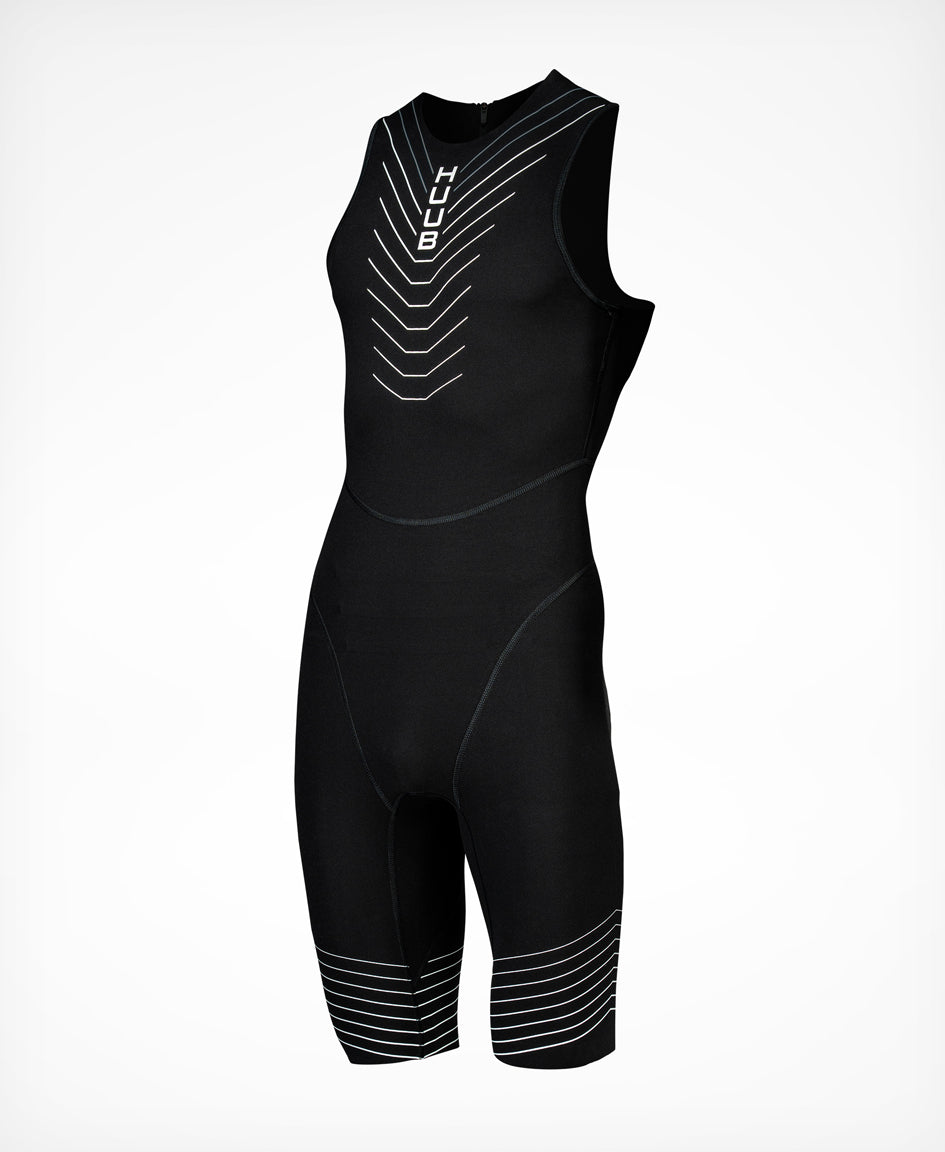
As warm-water racing returns, one of the most common triathlon gear questions is also one of the most misunderstood: when should you wear a swimskin, and when do you still want a wetsuit?
That question becomes more relevant right now because the 2026 World Triathlon Championship Series Yokohama takes place on May 16-17, 2026, which is a useful reminder that non-wetsuit conversations start early in the season. Exact rules vary by organiser, but if you race through spring and summer, you need to know the difference before race week.
First: always check the specific race rules
There is no single universal cutoff that covers every race organiser. World Triathlon rules and IRONMAN rules are not identical, and age-group exceptions can also matter.
Under current World Triathlon competition rules, age-group wetsuit cutoffs depend on swim distance. For example, wetsuits are generally not allowed above 22C for swims up to 1500m and above 24.6C for longer swims, with additional age-group considerations for athletes aged 60 and over. That is exactly why athletes should stop guessing and start checking the actual athlete guide for their race.
What a swimskin actually does
A swimskin is not a warm wetsuit substitute. It is a thin, hydrophobic outer layer designed for non-wetsuit swims. The goal is to reduce drag, improve surface feel, and give you a cleaner outer profile over your race suit when a neoprene wetsuit is either banned or simply not the right choice.
In other words, a swimskin is about speed and efficiency in legal non-wetsuit conditions, not buoyancy and insulation.
When a swimskin makes sense
- Your race is likely to be non-wetsuit legal.
- You are racing long enough that small efficiency gains matter.
- You want a smoother outer layer than your tri suit alone provides.
- You have practised getting it off quickly in transition.
For many triathletes, the swimskin decision becomes most relevant in late spring and summer races, especially when training has been wetsuit-heavy but race-day water temperature trends higher than expected.
When a wetsuit is still the better choice
- The race is clearly wetsuit legal and conditions favour buoyancy and warmth.
- You lose too much time or composure trying to fight a tight swimskin in transition.
- You have not practised in it and are making a race-week gamble.
If the wetsuit is legal and the swim demands warmth, confidence, and buoyancy more than slick outer-layer speed, the wetsuit usually remains the stronger option.
Fit matters more than marketing
A swimskin that wrinkles, grabs water, or fights your shoulders is not helping you. Before race week, check:
- Whether it sits smooth over your tri suit without major bunching.
- Whether breathing feels restricted in race posture.
- Whether the zip and neckline sit cleanly without rubbing.
- Whether you can remove it quickly after a harder swim effort.
That last point matters. A transition-time disaster can wipe out any gain from the swim.
Recommended products
HUUB Pinnacle Swimskin for Men: Built for non-wetsuit triathlon racing when you want a smoother outer layer over your race suit.
HUUB Pinnacle Swimskin for Women: A warm-water race-day option for athletes who want the same non-wetsuit focus in a women's-specific fit.
Frequently asked questions
Is a swimskin faster than a tri suit alone?
Often, yes, in the right non-wetsuit conditions, but the real-world gain depends on fit, body position, and how cleanly you transition out of it.
Can I wear a swimskin under a wetsuit?
Some athletes do, but it is usually not the point of buying one. A swimskin is primarily for races where a wetsuit is not the right or legal option.
Should I buy a swimskin for every triathlon?
No. It makes the most sense if you regularly race in warm-water conditions where wetsuit legality is uncertain or unlikely.
Shop the range
If you have warm-water racing on the calendar, check the rule set early, practise your transition, and choose gear based on likely conditions rather than wishful thinking.