 Envio gratuito: Encomendas da Irlanda superiores a €50 | Reino Unido e Europa superiores a €100.

There is a reason more endurance athletes are talking about 90 grams of carbohydrate per hour: race intensity, faster bike splits, and stronger nutrition products have pushed carbohydrate delivery well beyond the old one-gel-per-hour approach. The problem is that many athletes still try to jump straight to high intake on race day, then blame the gels when their stomachs revolt.
The real skill is not just choosing a number. It is building a plan you can actually absorb when your heart rate is high, your gut is under stress, and the race is still hours from over.
Why 90 grams per hour is now a common target
Sports nutrition guidance for endurance events has moved steadily toward higher carbohydrate intake during long sessions, especially when duration exceeds two to three hours. Multi-transportable carbohydrate blends can help athletes absorb more than older single-source strategies, which is why 60-90 grams per hour is now a practical target zone for many long-course triathletes.
That does not mean every athlete needs exactly 90 grams every hour. It means many triathletes are underfueling when they rely on outdated plans.
Start with your race, not someone else's spreadsheet
A good fueling plan depends on race duration, intensity, and what you can tolerate in real conditions.
- Olympic-distance racing may only need a modest on-course carbohydrate strategy depending on pace and start-line fueling.
- 70.3 athletes often benefit from a more deliberate 60-90 grams per hour bike plan, with a realistic run-downshift.
- Full-distance athletes usually need a more conservative execution strategy, because the best plan on paper is useless if your gut shuts down at hour four.
The smartest place to start is with what you can repeat in training, not with an aspirational number you saw on social media.
A simple way to build your plan
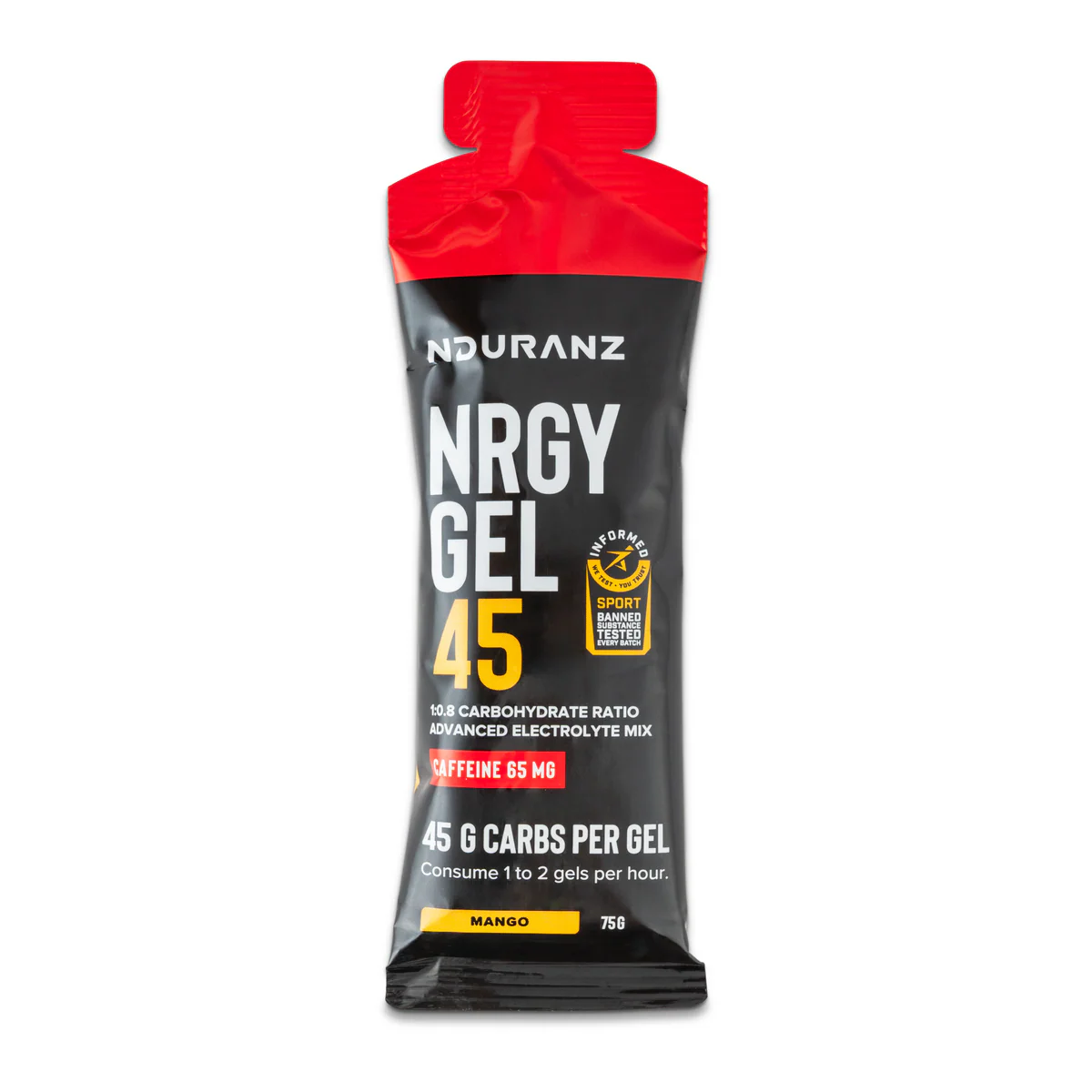
Each Nduranz Energy Gel 45g Carbohydrate serving gives you a clean way to think in real numbers. Two servings per hour gets you close to 90 grams. One serving every 30 minutes is simple, measurable, and easy to rehearse.
Example bike setup for a 70.3 athlete aiming around 90 grams per hour:
- 1 gel in the first 15-20 minutes after settling on the bike.
- 1 gel every 30 minutes after that.
- Water intake adjusted to conditions instead of forcing all calories into one bottle.
That structure is not magic. It is just easier to execute than a complicated mix of half-bars, random sips, and late panic fueling.
Where caffeine fits
Caffeine can improve endurance performance for many athletes, but it is still a dose and timing tool, not a free speed button. If you tolerate caffeine well, a product like Nduranz Energy Gel 45g Carbohydrate with Caffeine can make sense later in the bike or early in the run when perceived effort starts to rise.
The key is to test caffeine in training at race-like intensity. Athletes vary widely in how they respond, and more is not always better.
How to gut-train your way into higher intake
If 90 grams per hour feels impossible right now, that does not mean it is the wrong target forever. It usually means your gut needs practice.
- Pick one long ride each week for fueling rehearsal.
- Hold the product choice steady for at least a few sessions.
- Increase intake gradually instead of jumping from 40 to 90 grams in one day.
- Practice the same spacing you want to use in racing.
- Notice what happens late in the session, not just in the first hour.
Many athletes can tolerate more carbohydrate than they think once intake is structured and repeated often enough.
Common mistakes that wreck otherwise good fueling plans
- Starting too late because the first hour feels easy.
- Trying to "catch up" after underfueling early.
- Taking caffeine blindly instead of planning it.
- Using race day as the first real test.
- Changing products because a session felt bad once, without checking pacing, heat, or hydration first.
Recommended products
Nduranz Energy Gel 45g Carbohydrate: A straightforward option for athletes building a higher-carb plan in repeatable 45-gram steps.
Nduranz Energy Gel 45g Carbohydrate with Caffeine: Useful when you want to layer caffeine into your plan without guessing.
Frequently asked questions
Does every triathlete need 90 grams of carbohydrate per hour?
No. It is a useful benchmark for many long-course athletes, but your best target depends on race duration, intensity, and gut tolerance.
Can I use only gels to hit 90 grams per hour?
Some athletes can. Others do better with a mix of drink and gels. The right answer is the one you can absorb consistently.
When should I take caffeine in a triathlon?
Usually later than athletes think. Many do well saving caffeine for the second half of the bike or the start of the run, but it should be tested in training first.
Shop the range
If you want to fuel harder without gut chaos, build the plan around repeatable numbers, practice it in training, and choose products that make the math simple under pressure.
Shop Energy Gels | Shop Fuel & Energy | Shop During Training