 Free shipping: Ireland orders over €60

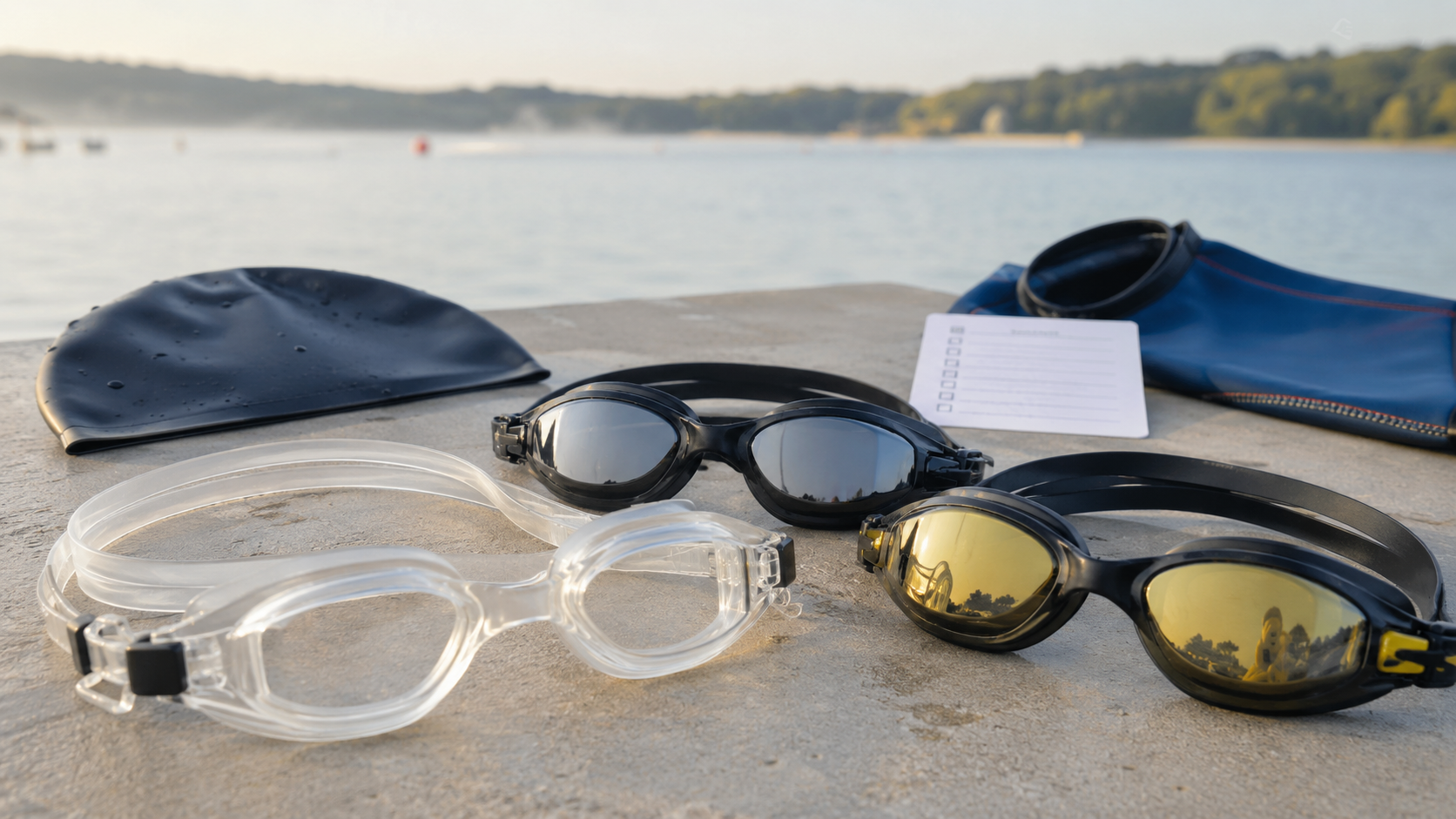
Open-water swim goggles are not just a pool goggle with a darker lens. In a triathlon swim, you are trying to see buoys, other athletes, chop, glare, shallow edges, exit arches and sometimes very different light conditions within the same session.
This guide is for triathletes choosing between clear, smoke, mirror and photochromatic-style lenses, and for swimmers deciding whether a wider open-water goggle or swim-mask style fit makes sense.
The short answer
If you only buy one pair for Irish and European race conditions, choose a comfortable open-water goggle with wide visibility and a versatile tint: light smoke, smoke, or photochromatic-style if available. If you regularly race at sunrise, in cloudy water, or in shaded venues, keep a clear-lens option in your kit. If you race in bright sun or glare off open water, a mirror lens can be useful.
The right lens is the one that lets you sight confidently without making the water feel darker than it already is.
Why open-water goggles are different
Pool goggles are built around lane lines, controlled lighting and short sighting distances. Open water asks more from the goggle. You need enough peripheral vision to track swimmers around you, enough contrast to find buoys, and enough comfort that the seal stays settled through a mass start and a longer swim.
Triathlon Ireland's open-water guidance recommends goggles because they help swimmers see underwater obstructions, and it also highlights visibility equipment such as bright caps and tow floats for safer swimming. That is the right starting point: goggles are part of a visibility and safety system, not just a comfort item.
Clear lenses: best for low light and confidence
Clear lenses are the safest choice when light is limited. They are useful for early starts, shaded lakes, murky water, evening sessions, indoor-to-outdoor uncertainty, and athletes who feel more relaxed when the view is as bright as possible.
Choose clear lenses when:
- The swim starts early or the forecast is overcast.
- The course is shaded by trees, cliffs or buildings.
- You are new to open water and want maximum visual feedback.
- You are training in lower light rather than racing in bright sun.
For a wide-field option, the HUUB Manta Ray Open Water Swim Goggle includes a clear variant and uses a swim-mask style shape for a broader view.
Smoke lenses: the everyday open-water option
Smoke lenses reduce brightness without the stronger light-blocking feel of a dark mirror lens. For many triathletes, this is the most practical middle ground: enough tint for outdoor glare, but not so dark that a cloudy swim becomes hard to read.
Choose smoke lenses when:
- You want one pair for mixed race and training conditions.
- You swim outdoors in variable weather.
- You prefer a calmer, less bright view without heavy tint.
- You are not sure whether race morning will be sunny or dull.
The HUUB Vision Swim Goggle is a wide-lens open-water and triathlon option, while the Manta Ray has a light-smoke variant for athletes who prefer the mask-style fit.
Mirror lenses: useful for bright sun and glare
Mirror lenses can help when the water is bright, glare is strong, or the sun is low enough to make sighting uncomfortable. They are often chosen for exposed lakes, sea swims, summer races and venues where the outbound or return line points toward the sun.
The trade-off is simple: a darker or more reflective lens may feel less useful if the swim is cloudy, shaded or late in the day. If you choose mirror lenses for racing, test them in open water before the event rather than finding out on the start line that they feel too dark.
For race-focused mirror options, see the HUUB Brownlee Custom Air 2 Swim Goggle or the HUUB Altair Swim Goggle.
Photochromatic-style lenses: useful when conditions change
Photochromatic-style lenses are designed for variable light. They can be especially useful when a session starts in cloud, moves into sun, or includes shaded and exposed sections. They are not magic, and the exact behaviour depends on the lens and conditions, but the appeal is clear: fewer decisions when the weather is uncertain.
The HUUB Manta Ray Open Water Swim Goggle includes a photochromatic gold mirror variant, making it a useful option for swimmers who want a broader open-water field of view with changing-light coverage.
Do not ignore UV protection
Lens tint is not the same thing as UV protection. Johns Hopkins Medicine notes that sunglasses should be chosen for high UV protection, and that polarized lenses can reduce glare but are separate from UV protection. The same logic matters for outdoor swim eyewear: do not assume a dark lens is automatically safer for sun exposure.
When comparing goggles, look at the product information for UV protection, lens type, fit and intended use. HUUB's open-water goggle range in the Swim Goggles collection includes options tagged for UV protection, open-water swimming and triathlon use.
Fit matters more than lens theory
A perfect lens is not much help if the goggle leaks, pinches or fogs early. Before race week, test your goggles during a real open-water session and check four things:
- Seal: the gasket should sit cleanly without needing the strap painfully tight.
- Field of view: you should be able to sight without lifting your whole head too high.
- Comfort: the bridge and eye socket should feel settled after 20 to 30 minutes.
- Backup plan: bring a second pair with a different lens if conditions are uncertain.
A simple race-week decision framework
| Race condition | Best lens starting point | Why |
|---|---|---|
| Early start, cloud, shade or murky water | Clear or light smoke | Keeps the view bright and less restrictive. |
| Mixed Irish or European summer weather | Smoke or versatile tint | Balances brightness control with usable visibility. |
| Bright sun, exposed lake or sea glare | Mirror or darker smoke | Helps reduce brightness and glare discomfort. |
| Changing light across the course | Photochromatic-style | Useful when conditions are hard to predict. |
Internal links for your race kit
- Shop swim goggles
- Shop HUUB triathlon gear
- Shop race-day essentials
- Read: Swimskin vs Wetsuit in Triathlon
FAQ
What is the best goggle lens for open-water triathlon?
For most athletes, smoke or light-smoke lenses are the best starting point because they work across more conditions. Clear lenses are better for low light, while mirror lenses are useful in bright sun and glare.
Should I race with clear or tinted goggles?
Choose clear if the swim is early, shaded, cloudy or murky. Choose tinted or smoke if the swim is outdoors in brighter conditions. If you are unsure, pack both and decide after looking at the course on race morning.
Are mirror goggles always better for triathlon?
No. Mirror goggles can be excellent in bright sun, but they may feel too dark in cloud or shade. Test them in open water before racing.
Are wide-lens goggles worth it for open water?
Often, yes. A wider lens can make it easier to sight and stay aware of nearby swimmers, especially in busier starts or longer swims. Fit still matters more than lens width alone.
Can I use pool goggles for triathlon?
You can, but many pool goggles have a narrower field of view and may feel less comfortable during longer open-water swims. If you train and race outdoors often, an open-water specific option is usually easier to live with.
Bottom line
Do not pick goggles by colour alone. Pick them by the water you swim in, the light you expect, the fit you can trust, and the backup pair you are willing to carry. For most triathletes, a wide-lens smoke or adaptable open-water goggle is the best first pair, with clear or mirror lenses added when your race calendar demands it.
Browse open-water swim goggles at Endurance Lab and choose the lens setup that matches your next race venue.
Sources and evidence notes
- Triathlon Ireland open-water swimming guidance: goggles are recommended for seeing underwater obstructions, with wider safety context around swimmer visibility.
- Johns Hopkins Medicine on UV eye protection: useful for cautious claims around UV protection and glare, without overstating lens benefits.
- World Aquatics open-water rules hub and IRONMAN competition rules hub: athletes should check event-specific rules and conditions before race week.